


- Written by: markitmedia52@gmail.com
- August 5, 2026
The Importance of Access to Training and Sports Equipment
Talent can begin anywhere, but opportunity does not.
Across many communities, young athletes have the passion, discipline, and potential to succeed, yet they often lack access to proper coaching, safe training spaces, suitable sports equipment, and opportunities to compete.
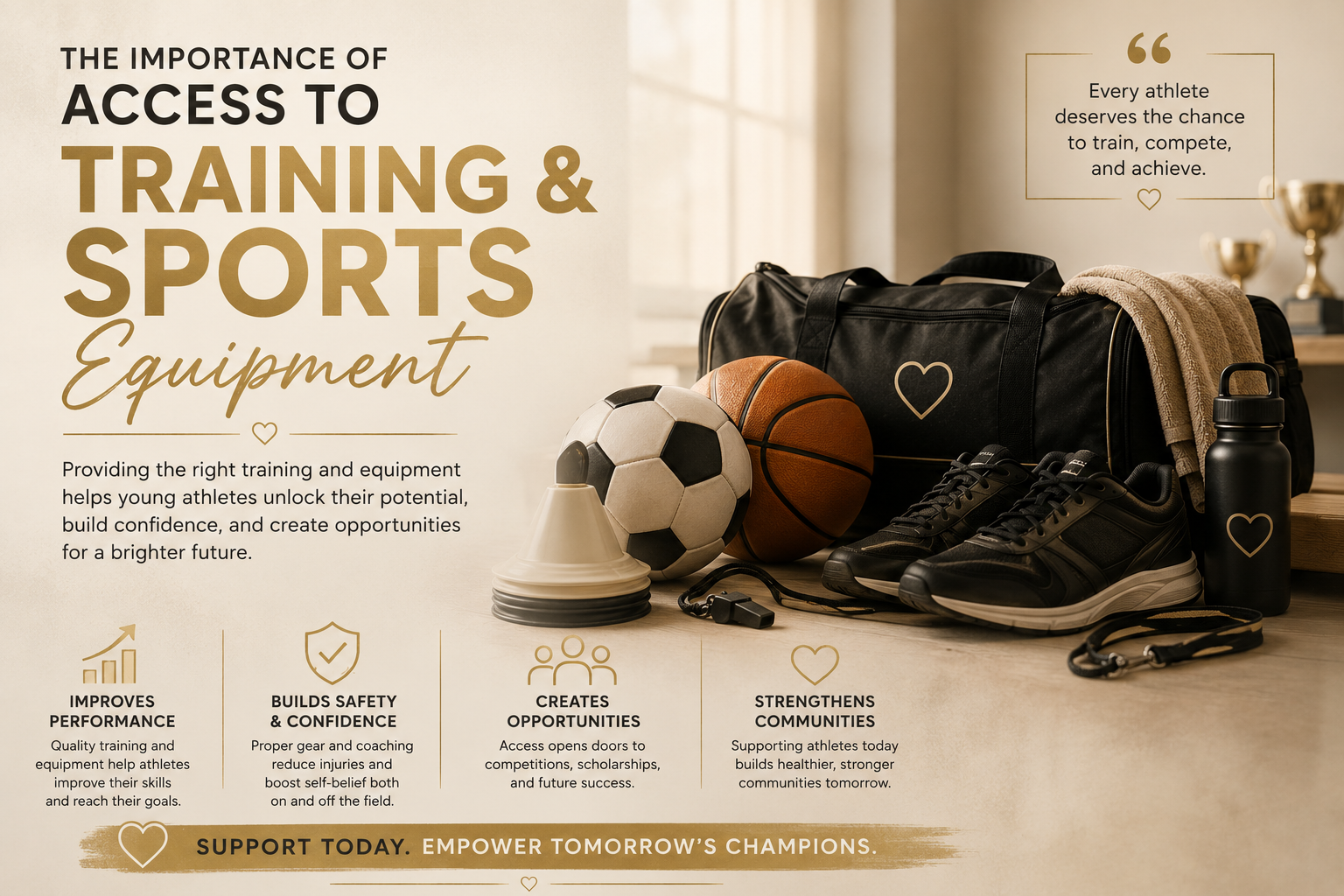
Without these essential resources, even the most determined athlete may struggle to develop their abilities. Providing access to training and equipment is therefore more than supporting participation in sports. It is an investment in confidence, health, discipline, leadership, and long-term opportunity.
Talent Needs the Right Environment to Grow
Natural ability can help an athlete get started, but talent alone is rarely enough to reach a higher level.
Athletes need regular practice, professional guidance, structured routines, and opportunities to learn from their mistakes. They must understand technique, fitness, nutrition, teamwork, and mental preparation.
A young runner may have exceptional speed, but without proper coaching, training shoes, and access to a safe track, that potential may remain undiscovered. A talented football player may struggle to improve without a suitable ball, proper boots, team training, or organised competitions.
The right environment helps athletes turn raw ability into consistent performance.
Proper Equipment Improves Performance
Sports equipment plays an important role in helping athletes train effectively.
Suitable footwear, protective gear, uniforms, training tools, and sport-specific equipment allow athletes to practise with greater confidence and accuracy. Proper equipment can help them improve their technique, develop strength, and prepare for competitive environments.
For many families, however, the cost of sports equipment can be difficult to manage. As young athletes grow, equipment may need to be replaced regularly. Travel expenses, coaching fees, competition registration, and uniforms can create additional financial pressure.
When equipment is made available through sponsorships, donations, or community programmes, athletes can focus more on improving their skills and less on the financial barriers surrounding participation.
Safe Equipment Helps Prevent Injuries
Access to suitable equipment is also important for athlete safety.
Worn-out shoes, damaged protective gear, incorrect clothing, or unsafe training facilities can increase the risk of injury. Athletes who practise without proper supervision may also develop poor techniques that place unnecessary stress on their bodies.
Quality equipment and knowledgeable coaching help reduce these risks.
Coaches can teach athletes how to warm up, recover properly, use equipment safely, and recognise the early signs of injury. This guidance is especially important for young athletes whose bodies are still developing.
Supporting safe training protects athletes today while helping them build healthy habits for the future.
Coaching Provides Structure and Direction
A good coach does more than teach an athlete how to play a sport.
Coaches provide encouragement, discipline, feedback, and direction. They help athletes set realistic goals, understand their strengths, and improve areas that need further development.
For young people, coaches can also become trusted mentors and positive role models.
They teach important lessons about responsibility, patience, teamwork, respect, and resilience. They help athletes understand that success is built through consistent effort rather than instant results.
Many young athletes lose motivation because they do not have someone guiding their progress. Access to trained coaches can help them remain focused and committed, even when the journey becomes difficult.
Training Builds Confidence Beyond Sports
The benefits of athletic training are not limited to physical performance.
Sports can help young people develop confidence, communication skills, leadership qualities, and emotional strength. Athletes learn how to handle pressure, accept feedback, recover from setbacks, and work toward long-term goals.
These lessons can influence many areas of life.
A student who learns discipline through training may become more organised in school. A young athlete who develops teamwork skills may become a stronger leader in the workplace. Someone who learns to recover after losing a competition may become better prepared to face challenges in their personal life.
By supporting sports development, we are helping young people build skills that remain valuable long after a match or competition has ended.
Sports Create a Sense of Belonging
For many young people, sports provide a safe and positive community.
Training with teammates creates friendships, shared goals, and a sense of belonging. Athletes learn how to support one another, celebrate success together, and remain united during difficult moments.
This environment can be especially valuable for young people who may feel isolated or lack positive recreational opportunities.
Community sports programmes can provide structure after school, reduce exposure to harmful influences, and connect athletes with coaches and mentors who care about their progress.
When young people feel supported and included, they are more likely to remain engaged, confident, and hopeful about their future.
Access Creates Fairer Opportunities
Not every athlete begins with the same level of support.
Some young people have access to private coaching, quality facilities, equipment, transportation, and competitive events. Others may have similar talent but none of the same resources.
This difference can prevent capable athletes from being noticed or selected for further opportunities.
Creating fair access to sports resources helps ensure that success is determined more by ability and effort than by financial circumstances.
Scholarships, equipment donations, sponsorships, community training programmes, and free coaching sessions can help talented athletes from underserved communities compete on more equal terms.
Opportunity should not depend entirely on what a family can afford.
Competitions Help Athletes Gain Experience
Training prepares athletes, but competition helps them grow.
Participating in organised events gives athletes the opportunity to test their skills, manage pressure, learn from stronger competitors, and understand the standards required at higher levels.
Competitions can also help young athletes become visible to coaches, clubs, schools, sponsors, and sporting organisations.
However, competition expenses can be a major barrier. Registration fees, uniforms, transportation, meals, and accommodation may prevent athletes from participating.
Financial support can help remove these obstacles and give athletes the experience they need to move forward.
Supporting Athletes Strengthens Communities
When a young athlete succeeds, the impact is often felt throughout the community.
Athletes can become role models who inspire younger children to participate in sports, stay active, and believe in their own potential. They may later become coaches, mentors, trainers, or community leaders.
Sports programmes can also bring families together, encourage healthier lifestyles, and create positive community pride.
Supporting one athlete can therefore contribute to a much wider cycle of motivation and opportunity.
A young person who receives equipment and coaching today may be the person encouraging and training the next generation tomorrow.
How Foundations and Donors Can Help
Foundations, businesses, volunteers, and individual donors can play a meaningful role in improving access to sports.
Support may include:
- Donating sports equipment and uniforms
- Funding coaching and training sessions
- Sponsoring competition and travel expenses
- Improving local sports facilities
- Providing athlete scholarships
- Supporting nutrition and wellness programmes
- Connecting athletes with mentors and professional networks
Even a relatively small contribution can make a practical difference.
A pair of running shoes can help an athlete train safely. A transportation grant can help a team attend a competition. A coaching scholarship can provide months of guidance and development.
The value of support is measured not only by its cost, but by the opportunity it creates.
Our Commitment to Developing Athletic Potential
Our foundation believes that talented athletes should not be held back by a lack of resources.
By working with coaches, schools, clubs, volunteers, donors, and community partners, we aim to help young athletes gain access to the training, equipment, and opportunities they need to grow.
Our goal is not only to support better performance. It is to help athletes build confidence, discipline, leadership skills, and a stronger sense of possibility.
Every athlete deserves the chance to train safely, compete fairly, and discover how far their potential can take them.
Building Champions On and Off the Field
Access to training and sports equipment can change the direction of a young person’s life.
It gives athletes the tools to improve, the confidence to continue, and the opportunity to pursue goals that may once have seemed impossible.
Supporting athletes is not simply about creating winners. It is about developing healthier, stronger, more disciplined, and more confident individuals.
When we invest in athletic potential, we help build champions both on and off the field.
Support young athletes today and help turn potential into opportunity.